


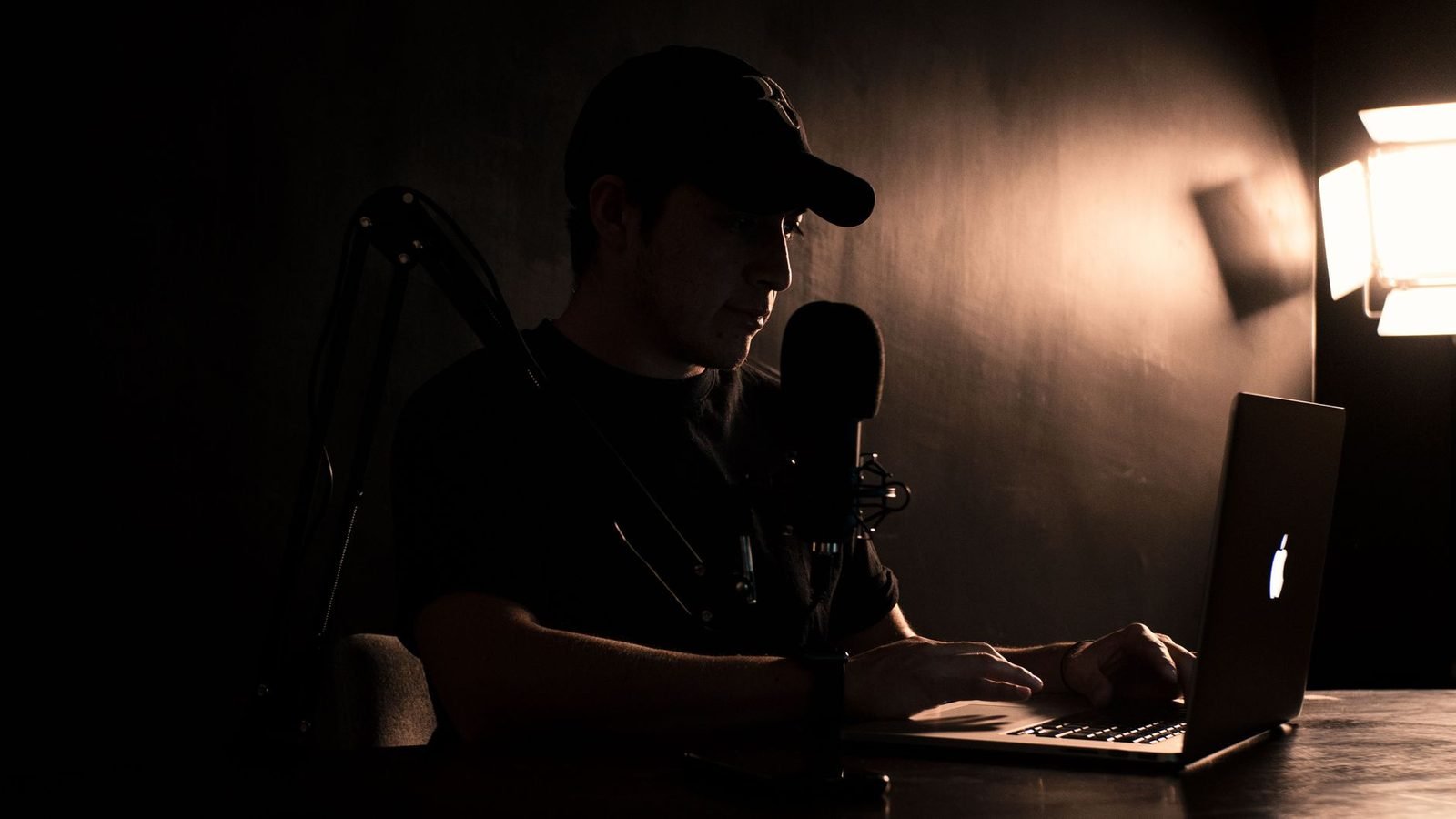
“You have a lovely voice, you should do that for a living.” The sentence launches a lot of vocations and predicts the rest very badly. A pleasant timbre opens a door. It says nothing about what you will be asked for once you are through it: holding an intention for several minutes, taking a note and applying it on the next take, delivering a usable file, starting again the following day under the same conditions.
The myth of the perfect voice does not survive one session
There is no universally ideal timbre, and that is the best news in this job. A low, settled voice finds its place on trailers, documentaries and serious training. An unusual voice, nasal or too marked for mainstream advertising, becomes an asset in dubbing, animation and video games, where the work calls for characters rather than smooth voices. Timbre is not what sorts applications. What the actor does with it is.
What can be worked on, and what gets assessed, comes down to four things: diction and articulation, breath and pace, emotional range, and the ability to fit all of that to the context. A text read cleanly stays a text read: you hear the words and nothing appears. An intention carried brings a situation into the room: somebody speaking to somebody, for a specific reason.
Six families of work, and what each one asks that the others do not
Plenty of beginners say they want to do voice over without knowing which kind. From a distance the families look alike. Up close they do not recruit the same qualities.
Advertising. Few words, a duration fixed to the second, and energy that has to exist from the first syllable. On a short script, two or three different intentions are worth recording: they give the edit a choice.
Corporate and institutional. Settled diction, a neutral tone, and an intention that does not move for several minutes. The difficulty is underrated: holding the same color from start to finish takes more control than any effect.
Dubbing. The performance already exists. An actor played the scene with their own pace and their own silences, and you step inside it: landing on the same beat, lasting as long, matching the labials, the p, b and m that visibly close the lips. Rhythmic precision and stage acting, seated in a booth, with nobody opposite you. Dubbing is the most technical side of the job.
Animation. When the work is created in the language, there is nothing to dub: the voice comes before the picture and the character has to exist for the ear alone. Stamina, a wide range, and the ability to find the same character again several weeks later.
Audiobooks. Hours of recording, a consistency of characters and pace to hold over the long run, and vocal fatigue that becomes a technical subject in its own right.
E-learning. Clear, instructive, steady. Modules pile up over months: you have to find the same voice, the same pace and the same distance from the mic long after the first session.
Some actors specialize in a single territory, others build a double skill and move from corporate narration to a video game character. Both paths exist. What does not work is claiming all six families before mastering one.
What gets worked on, and how it shows
The daily life of a voice actor looks very little like a recording session. It is made of reading out loud from texts nobody commissioned, articulation exercises, diaphragm work, and playback. Recording yourself and then listening back is the thankless part of the work, and the part that moves you forward fastest: from the inside, you never hear what the microphone picks up. Build yourself a personal library of variations, it will become your raw material.
Breath deserves separate treatment. Breathing is audible, and it says before you do whether you are tense, tired, or settled in the text. It gets prepared, it gets placed, and it gets cleaned in the edit when it gets in the way. An actor who has not warmed up is spotted within the first few sentences, and nobody records cold. When articulation degrades mid-session, tongue twisters put the mechanics back faster than a tenth take. Water, breaks and sleep are part of the technique, on the same footing as the microphone.
Then comes the least visible skill and the most decisive one: taking direction. In session you will be given a short note, sometimes a counter-intuitive one, and you will have to turn it into acting without losing the thread of the text. Then do it again. Going again because a take felt wrong teaches nobody anything. Going again because you identified what was missing, a breath in the wrong place, a swallowed word, an intention that slid on the way out, is what a voice director listens for in an actor.
Stacking takes proves nothing. The first one is often the most natural, and it is frequently the one kept in the edit. On a long text, from 400 or 500 words up, one or two complete passes are enough: beyond that the voice tires and the editing gets heavier.
Training helps, it guarantees nothing
Training speeds things up. A competent outside ear spots in one session what you cannot hear yourself doing, and the time saved is real. What it does not deliver is a right of entry. A studio listens to a result first: no school works as a pass, and no absence of school disqualifies anyone.
Plainly said: FRVOICEOVER does not run training, does not coach applicants and does not recommend any provider. The studio directs actors on the projects it produces, which is voice direction, not career support. Our team covers three jobs, general management, voice direction and sound engineering, and the studio works in 6 native languages.
From the booth
What stops a listen in the first few seconds is almost never the timbre. It is the room. Living-room reverb, a ventilation unit, a computer fan: those faults do not come out in the mix, they get re-recorded. The second reason we stop is exactly the opposite, a demo compressed and de-noised until the grain of the voice is gone, where you can no longer hear who is speaking. Between the two, a small natural flaw always sits better than a voice that has been ironed flat.
Recording from home: what a studio expects from a file made in your place
Remote work has become the norm and most actors record at home. The bar has not dropped for it. Three expectations, in that order.
A room that does not ring. Isolation and absorption are two different problems, and confusing them spoils the recording: foam absorbs internal reflections, it stops no noise from getting in. Pick the least exposed room, seal the door and the window, switch off the fridge and the ventilation, then treat the reflections with fabric: heavy curtains, a thick rug, or a closet full of clothes. The clap test settles it: if you hear a distinct echo, the room is not ready. A small furnished room beats a large bare one, whatever microphone you put in the middle.
A clean, unprocessed level. Peaks between -12 and -6 dB, and nothing applied to the take: no EQ, no compression, no added reverb. A studio would always rather receive neutral material it can work with. The reference delivery format is still WAV at 48 kHz and 24 bits, unless the client says otherwise.
Consistency. The same distance from the mic, 6 to 8 inches or 15 to 20 cm for a cardioid, the same position, the same chain, from one session to the next. Write your setup down and reproduce it. The reason is concrete: on a project with several actors each recording at home, the studio’s job is to create the illusion that every voice came from the same place. A take that changes color between two sessions can be pulled back in post, but it lengthens everyone’s work.
Name your files from the first take, something like Project_Artist_Take01.wav, and keep the originals: a client can ask for a pickup months later.
What makes someone listen all the way through
A demo runs 60 to 90 seconds. Beyond that people stop listening and start skimming. Put your strongest extracts at the front, the ones that show what you can reproduce on demand, and vary the settings: a settled read, a higher energy, with and without music. Do not show a register you will not hold in session, that is the classic trap of a flattering edit.
What makes us stop at the first sentence comes back often: a ten-second music fade before the voice, a single extract several minutes long, a room that rings, a link that will not open, a file whose name says neither who is speaking nor in which language.
The message that comes with the demo counts as much as the demo. Short, precise, no flattery. What you can do, your languages with their real level, native, working language, regional accent if there is one, your recording situation, and a link that works first time. Declaring three registers you actually hold beats claiming every style.
What FRVOICEOVER listens to year-round, and on what terms to apply
FRVOICEOVER is a casting agency as much as a studio. After 15 years and roughly 3,000 projects, the catalogue brings together more than 100 voices and it keeps renewing itself: applications are open year-round, in every style, every language and every age. A catalogue that is kept and contracted also serves the actors, because the rights chain is documented and every use is written down.
Before you send anything, check these five points.
- A demo of 60 to 90 seconds, varied extracts, the strongest first.
- Your languages declared at their real level, accents included.
- A recording made in a treated room, at a clean level, with nothing applied.
- A file named legibly and a link that opens first time.
- The ability to take direction and to go again for a reason you can name.
If one of those points is not ready, work on it before writing. That work is never wasted, and an incomplete application is rarely listened to all the way through. Applying gives you no right to a project: the catalogue fills at the pace of what productions actually need. When those five points are in place, put your voice in front of the FRVOICEOVER catalogue.
Is your demo ready?
FRVOICEOVER takes applications year-round, in every style, every language and every age. Read the admission requirements, then send yours.
Join the catalogue